
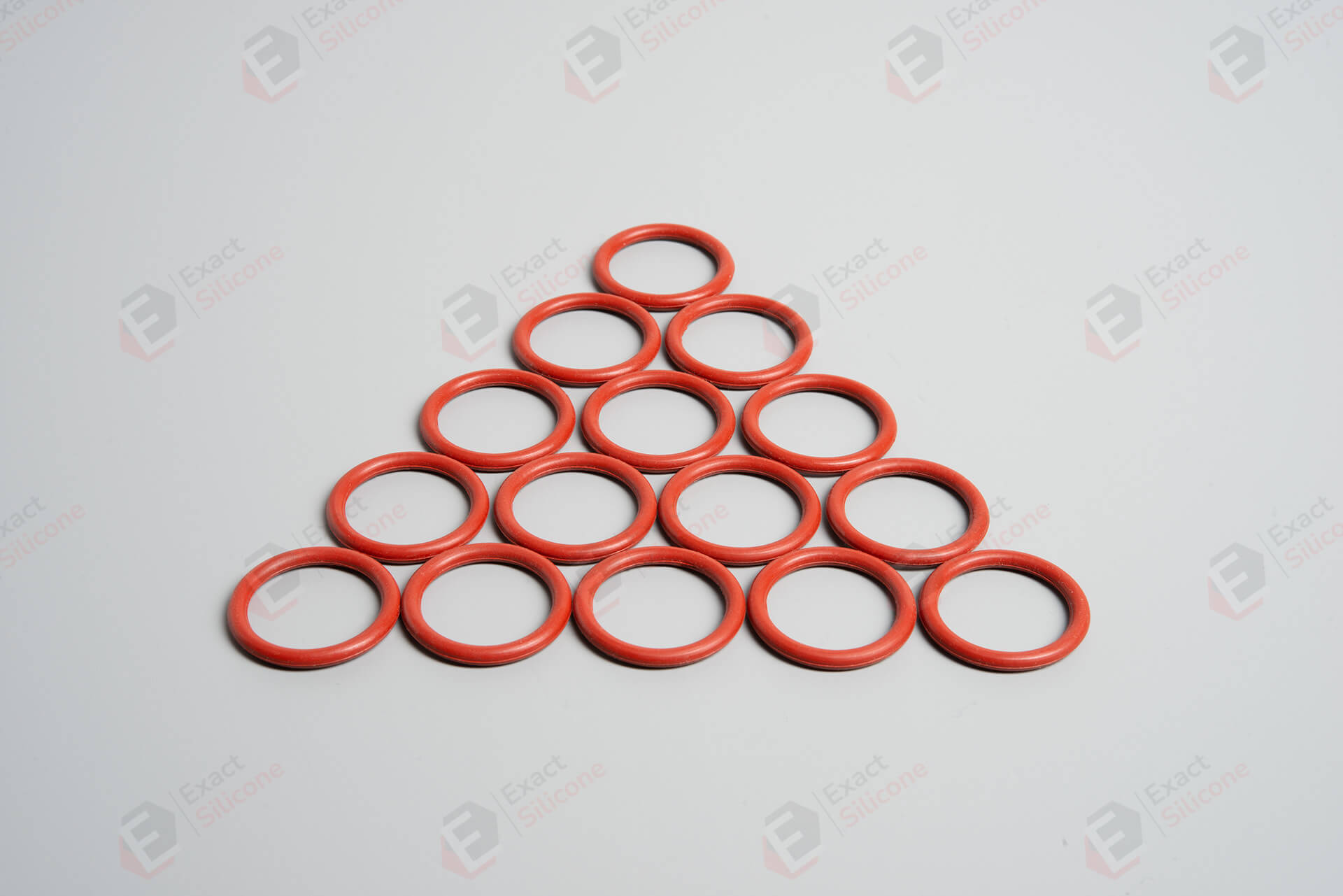
Silicone O-Ring Suppliers & Manufacturers: How to Choose the Right Partner
Sourcing silicone O-rings is about far more than matching an inner diameter and cross-section. The right silicone O-ring supplier pairs the correct material and durometer to your operating conditions, backs the right regulatory grade for your industry, holds custom sizes to tight tolerances, and stands behind every part with quality documentation. This guide walks through what to look for when you evaluate a silicone O-ring manufacturer in the United States, so your seal performs the first time and every time after.
Why Silicone for O-Ring Sealing
Silicone rubber is a go-to elastomer for sealing applications that see wide temperature swings, sustained heat, and demanding hygiene requirements. On our silicone O-rings product page, the material is rated for service from -95°F to 450°F, giving it a working window that many general-purpose elastomers cannot match. Silicone also offers strong UV and ozone resistance, excellent dielectric (electrical-insulating) properties, and an odorless, non-toxic profile that suits food and medical use.
Silicone does have limits worth designing around. It has comparatively low tensile strength and poor abrasion resistance, so it is generally better suited to static seals than to high-wear dynamic applications, and it is not the right choice for many concentrated solvents, fuels, and aromatic hydrocarbons. A knowledgeable supplier will tell you when a fluorosilicone or a different elastomer is the better fit rather than forcing silicone into the wrong job.
Match the Material and Cure to Your Application
Not all silicone is the same, and the cure system matters. A capable manufacturer should be able to quote more than one option so the chemistry fits your environment:
- Platinum-cured silicone — a clean, addition-cure process favored for food, medical, and pharmaceutical contact where purity and low extractables matter.
- Peroxide-cured silicone — a cost-effective, widely used cure for general industrial sealing.
- Fluorosilicone — adds resistance to fuels, oils, and solvents that standard silicone does not tolerate well.
Durometer (Hardness) Selection
Durometer is measured on the Shore A scale, and silicone O-rings are commonly available across a range of hardnesses. As a general rule, softer compounds seal better against low clamping force and rough surfaces, while firmer compounds resist extrusion under higher pressure. Share your gland dimensions, pressure, and surface finish with your supplier and let them recommend a durometer — a good manufacturer treats hardness as an engineering decision, not a catalog default.
Regulatory and Grade Options
If your O-ring touches food, water, or the human body, the compound and its documentation have to match the standard. The grades below are among those referenced for our silicone O-rings; confirm the specific certification your part requires when you request a quote.
| Standard / Grade | Typical Relevance |
|---|---|
| FDA 21 CFR 177.2600 | Rubber articles intended for repeated food contact |
| USP Class VI | Biocompatibility screening common in medical devices |
| NSF 51 | Materials used in food-equipment applications |
| 3-A Sanitary | Hygienic design for dairy and food processing |
| ASTM D2000 / AMS 3304 | Rubber material callouts common in industrial and aerospace specs |
Always ask whether a given grade is available for your compound and geometry. A specific certification applies to a specific material, not to “silicone” in general, so a straight answer here separates a real manufacturer from a reseller.
Custom Sizes, Cores, and Configurations
Standard AS568 sizes cover a lot of ground, but many real-world seals need something the catalog does not carry. Look for a supplier that produces custom sizes and cross-sections, including very small seals, and that can offer alternative constructions when a solid ring is not enough:
- Solid-core O-rings for standard static sealing.
- Hollow-core O-rings for lower closure force and better sealing on uneven surfaces.
- Jacketed constructions such as FEP or PFA outer layers over a silicone core, combining silicone’s resilience with a low-friction, chemically resistant skin.
Quality Documentation and US Manufacturing
The seal is only as trustworthy as the paperwork behind it. When you shortlist a silicone O-ring manufacturer, ask what they will provide with the parts: material certifications, compliance statements for the grades above, and dimensional documentation. Domestic US manufacturing shortens lead times, keeps communication direct through design changes, and makes it easier to audit and re-order with confidence. Exactsilicone is a US-based custom silicone manufacturer in Indianapolis, Indiana, producing O-rings and other silicone components to spec.
Common Applications
Silicone O-rings appear across industries that need heat tolerance, hygiene, or electrical insulation, including aerospace, automotive, medical devices, electronics, food processing, and pharmaceuticals. If your application spans more than one of these, tell your supplier up front so the compound and grade are chosen for the most demanding condition.
Request a Silicone O-Ring Quote
The fastest way to get the right seal is to put your requirements in front of an engineer. Send your size, operating temperature and pressure, media, and any certification needs, and get a quote built around your application — not a stock part forced to fit. Request a silicone O-ring RFQ from Exactsilicone or reach the team at +1 (844) 783-5221 or info@exactsilicone.com.
Frequently Asked Questions
What temperature can silicone O-rings handle?
Our silicone O-rings are rated for service from -95°F to 450°F, which makes them well suited to applications with wide temperature swings and sustained heat. Confirm the rating for your specific compound when you request a quote.
Are food-grade and medical-grade silicone O-rings available?
Yes. Depending on the compound, silicone O-rings can be supplied to meet standards such as FDA 21 CFR 177.2600 for food contact, NSF 51, 3-A Sanitary, and USP Class VI for medical device biocompatibility. Specify the standard you need and we will confirm availability for your part.
Can you make custom silicone O-ring sizes?
Yes. In addition to standard sizes, we manufacture custom sizes and cross-sections, including small seals, plus hollow-core and jacketed (FEP or PFA) constructions when a standard solid ring will not do.
What is the difference between platinum-cured and peroxide-cured silicone?
Platinum-cured (addition-cure) silicone is a cleaner process preferred for food, medical, and pharmaceutical contact, while peroxide-cured silicone is a cost-effective option for general industrial sealing. We can quote both, plus fluorosilicone for fuel and solvent resistance.
Do you provide quality documentation?
Ask for the certifications and dimensional documentation you need when you request a quote, and we will confirm what can be supplied for your compound and configuration.